Requirement gateway

coaxial rf connector suppliers

Use this page to make coaxial rf connector suppliers answer the same cells. LinkScope Sourcing 35 coordinates the questions. The desk is not a connector manufacturer or authorized distributor, and it does not claim authorized distributor status.

1

Name the series

SMP, N, SMA, TNC, BNC, or a 2.92 mm interface. Do not merge them because each one is coaxial.

2

Lock the RF cells

Frequency range, impedance, VSWR or return loss, insertion loss, and power rating, each with its test note.

3

Separate the money

Piece price, plating extra, freight, duties, and excluded tools stay on different lines.

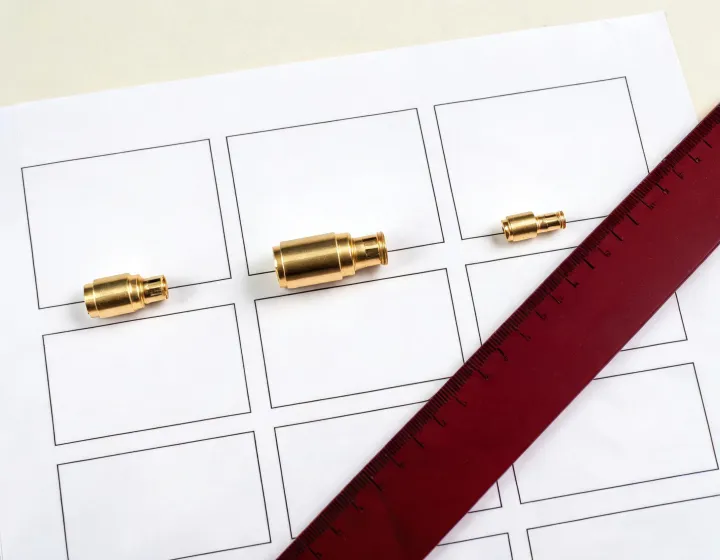
Printed coaxial quote sheet beside SMA, N, and SMP sample bodies

Interface cards a supplier reply should fill

Threaded families

N and TNC bodies need the thread callout, coupling torque if the drawing states one, and whether the gasket ships with the nut. Some N-type drawings state a coupling torque near 1.36 N·m. Use the figure on the drawing you are buying. IEC 61169-16 can be named as a Type N question source. It is not a test report from this desk.

Push-on families

SMP and similar blind-mate bodies need detent style and the engage force. A smooth-bore shroud and a full-detent shroud are different quotes. Public outlines often discuss windows toward 40 GHz. Confirm the curve on the offered part, including VSWR at the upper end of that window.

Board and cable ends

SMA and 2.92 mm parts are easy to mix in a photo. Ask for the interface diameter, the frequency range, and whether the cable attachment is solder, clamp, or crimp. A 2.92 mm pin into an SMA jack is a compatibility question, not an assumption.

Finish and cycles

Request gold thickness, such as 0.76 μm or 1.27 μm, the underplate, and the connector mating cycle count with its method. Return loss and insertion loss should name the frequency range. A single dB figure without gigahertz is incomplete.

Questions each coaxial quote must answer

Which costs sit outside the piece price?

Ask the plant to mark freight, duties, minimum lot, plating premium, custom body tooling, test-report fees, and adapters. A USD per-piece number on an EXW basis is not a delivered US cost. If you state a target budget, name the currency and whether it is per piece or for the whole order.

What document proves the RF numbers?

Request a datasheet tied to the exact model, a VSWR or return loss plot, the power rating condition, and the impedance. 50 ohm is the usual cell to confirm. A 75 ohm body should be labeled as such. MIL-STD-348 may help with interface dimensions. It does not replace the plot.

How should alternatives be marked?

A named-interface body may follow a customer drawing more directly. A compatible body may be offered when pin, thread, and plating match. The supplier should label deviations. Refurbished bodies need a separate condition note. New bodies should not be compared with replated surplus on one unmarked line.

Which compliance file is in scope?

For a passive connector, do not assume an FCC grant. If the buy is a radio assembly, ask whether 47 CFR Part 2 Subpart J authorization is in the packet and for which model. Ingress protection, if claimed, needs the mated condition. The inquiry rows are labels. The numbers live in the plant packet.
Send the coaxial scope for factory quotes

Include series, gender, frequency range, impedance, quantity, US destination, and timing. Add plating and VSWR if you already know them. High-end, mid-range, budget, or undecided stays a preference. Read the procurement brief if a cell is still blank, then use the form or the full brief page.